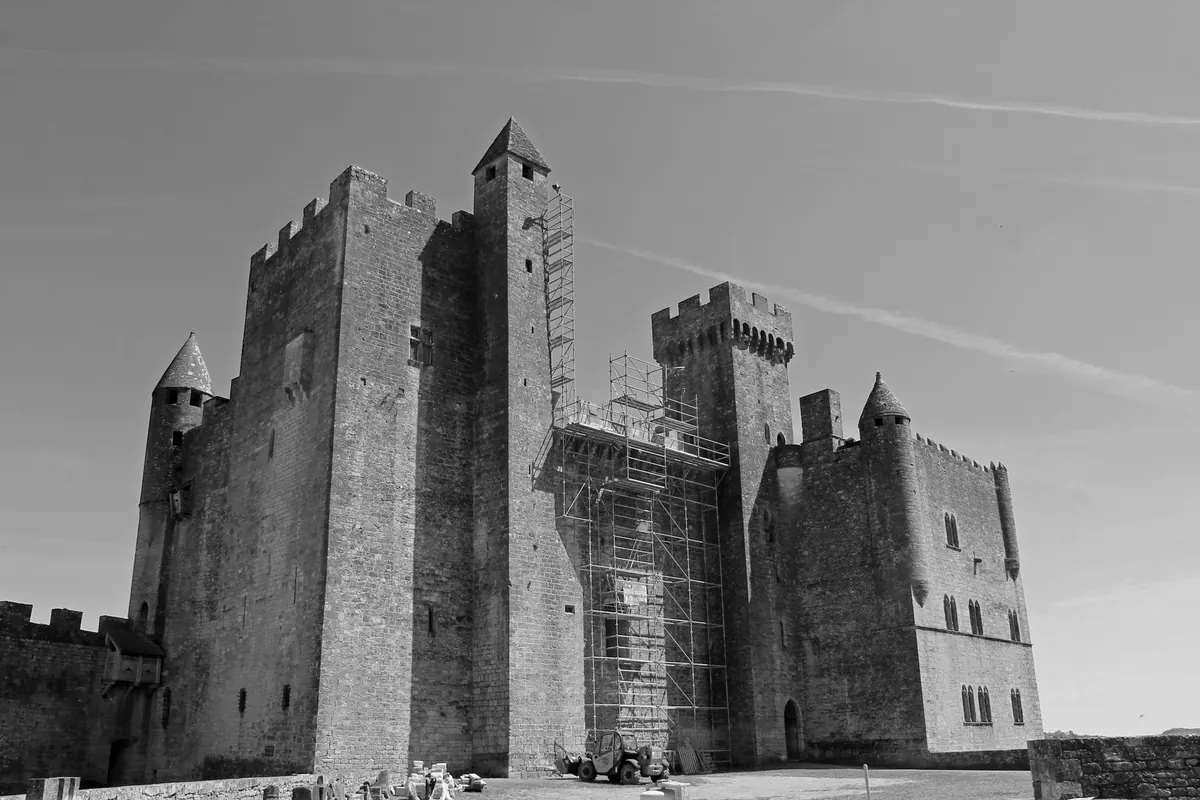
Castles rarely collapse without warning. They give notice first: a slipped coping stone, a gutter that has dripped onto soft mortar for a decade, a sapling rooting quietly in a wall-walk. The trouble is that the notice is usually read only by a passer-by, and the passer-by assumes that someone official already knows.
Often nobody does. Inspections happen on cycles that can be years apart, and a problem caught early costs a fraction of what the same problem costs after one winter of water getting in. If you have spotted something wrong at a castle, a ruined abbey, or a fragment of old wall, reporting it is a genuinely useful act. It does not require expertise. It requires accuracy, patience, and knowing where to send it.
First, decide whether it is damage or simply age
Old buildings are supposed to look old. Lime mortar erodes, stone faces weather back, iron cramps rust and bleed a stain down the wall. That patina is not a crisis, and reporting it will only waste someone's afternoon. What matters is anything that suggests active deterioration: a break with clean, bright faces, a crack that has widened, a wall that has started to lean, water running where it should not.
Signs that normally deserve a report
- Fresh fractures or spalling, especially where stone has dropped recently
- New or widening cracks, bulges, or a visible lean in a wall
- Blocked or broken rainwater goods, overflowing hoppers, stains spreading from a gutter
- Trees, ivy, or buddleia getting a hold in masonry, joints, or a wall head
- Missing roofs, slates, lead, railings, or an open doorway giving access to the interior
- Graffiti, fire damage, dumped waste, or evidence of metal detecting or digging
If you are unsure, report it anyway and say so. A cautious report that turns out to be nothing is a small cost. Silence is not.
Document it as though you were the only witness
You may well be. Take three photographs: a wide shot that shows where the problem sits in the whole structure, a middle shot that shows the element, and a close-up that shows the detail. Put something in the frame for scale if you can do it without touching anything — a boot, a coin, a walking pole. Do not move stones, pull at vegetation, or climb over fencing. Ivy pulled away from a wall can bring the wall with it, and on a protected site you may be committing an offence without meaning to.
Write down the date, the time, and the weather. Pin the location precisely: a grid reference, a mapping app pin, or a plain description such as "outer face of the south-east tower, about two metres above the grass". If you have seen the site before, note what has changed. "This was hairline in March and will now take a pencil" is more persuasive than any amount of indignation.
Work out who is actually responsible
Ownership decides everything, and it is not always obvious. A castle might belong to a national heritage body, a local authority, a private estate, a charitable trust, a church, or a government department. Some are guardianship sites where one organisation owns the ruin and another manages the ground. In the UK, for example, Historic England, Historic Environment Scotland, Cadw, and Northern Ireland's historic environment division each hold responsibility for different categories of monument, while local councils employ conservation officers who deal with listed buildings.
If you cannot tell who owns it
Ring the council and ask for the conservation officer or the planning department. They usually know, or know who does. Site signage, the council's online heritage records, or the local record office will often settle it in minutes. If the site is a scheduled monument, any works to it need consent, so the national heritage body will take an interest regardless of who holds the keys.
Write a report that actually gets read
You are not writing a campaign document. You are creating a work ticket for somebody with a long list of them. Keep it under a page and keep it factual.
- A specific subject line. "Loose masonry, south-east tower, [site name], reported 14 May" will be opened. "Concerned about the castle" may not.
- One short paragraph saying what you saw and why it worries you.
- Date, time, and precise location.
- Photographs as attachments, named sensibly. Rename that file — 2025-05-14-south-east-tower-crack.jpg is worth ten files called IMG_4471.
- What you would like to happen, phrased as a question: "Could someone check whether this needs a structural look?"
- Your contact details, and an offer to supply more images.
Say what you do not know. "I could not tell whether the gutter is blocked or the downpipe has failed" is more useful than a confident guess, and it saves the reader from chasing the wrong problem.
Treat immediate danger differently
If someone could be hurt today — masonry hanging over a public footpath, a wall visibly moving toward a road, an open shaft in long grass — do not email. Telephone the site owner, the council's emergency number, or the emergency services if there is a risk to life. Follow it up in writing afterwards so there is a record. Warn people from a safe distance if you can do so without putting yourself in harm's way, and otherwise leave it to those with the equipment and the liability.
Follow up, politely and persistently
Keep a simple log: date sent, who received it, any reference number. If you hear nothing within two or three weeks, resend the original with a short covering line asking for a reference number rather than an apology. Ask narrow questions — "Is this on the inspection schedule?" or "Has an engineer seen it?" — because questions get answered while frustration gets filed.
A visit once a season is reasonable. Photograph the same spot from the same angle each time. A dated sequence showing a crack opening month by month is far harder to set aside than a single image, and it gives the person arguing your case inside the organisation something concrete to take to a budget meeting. Stay courteous. The officer reading your email is often under-resourced and covering three counties, and the correspondent who is calm, accurate, and useful is the one who gets remembered.
When nothing happens at all
Escalate in order, and give each step a few weeks. The owner's head office or board comes first, then the local authority conservation officer, then the national heritage body. Your elected councillor or member of parliament can write to a public body and require a reply, which carries more weight than another round of emails from a member of the public.
Local civic societies, archaeological trusts, and national amenity bodies can add their voice, and are often better connected than any individual. That said, most cases do not need a campaign. They need the right photograph, sent to the right desk, with a patient follow-up.
If you believe a legal duty is being breached — unauthorised works to a listed building or scheduled monument, for instance — take proper advice before acting. Rules vary by country and by designation, and a solicitor or the relevant statutory heritage body can tell you whether a formal route exists and how to use it. Do not try to enforce it yourself.
The five-minute version
Photograph it widely, middling, and close. Note the date, the place, and what has changed. Find out who owns the site, then send one short, specific message with a clear subject line and well-named images. Diarise a follow-up, and return next season to photograph the same spot from the same angle.
That is the whole method. It costs you half an hour, and it is often the difference between a repair that happens quietly in the spring and a ruin that becomes a rescue job a decade later.
Photo: arnaud audoin / Pexels